Digital Education and Responsible AI
How African Education Systems Can Use AI to Improve Learning and Protect Every Learner
AI in African Education Systems Can Improve Learning Safely. How can AI help African education systems? Evidence from Nigeria and Ghana shows where guided tutoring may improve learning, and what safety and policy rules matter. AI can help African education systems extend guided practice, support teachers, and improve access. Evidence from Nigeria and Ghana is promising but limited to specific settings. The real test is whether children learn more, teachers stay in control, and public rules protect every learner.
 Bright Chimezie Irem14 Min Read
Table of Contents

AI can help more students get useful practice and support from teachers. But its impact on learning depends on how well it fits the curriculum, the guidance from adults, child safety, and the systems that support it. By Bright Chimezie Irem | Achieva Africa
Bright Chimezie Irem | Achieva Africa
In 2021, 27 percent of Nigerian children ages 7 to 14 had core reading skills at grade 2 or 3, while 25 percent met the equivalent measure in numeracy. UNICEF published the figures in 2024, but they describe learning measured in 2021. So they are a baseline, not a current estimate. Still, they show the scale of the work ahead. [1]
Artificial intelligence (AI) means computer systems that can recognize patterns, make predictions, or create content. Generative AI makes text or other materials when given instructions, and it is showing up in classrooms faster than schools can judge its value. For African governments, the main question is whether a tool helps students understand lessons and keeps them safe. Teachers and public institutions also need to be able to fix problems when they happen.
Still, each country is different because Africa does not have one education system, language, level of internet access, or policy. Nigeria’s experience gives helpful evidence, but it does not represent the whole continent. Begin by identifying the learning problem. Test AI to see if it helps, and only expand its use if the results hold up after careful review.
Edo State provides a promising example, though it has clear limits.
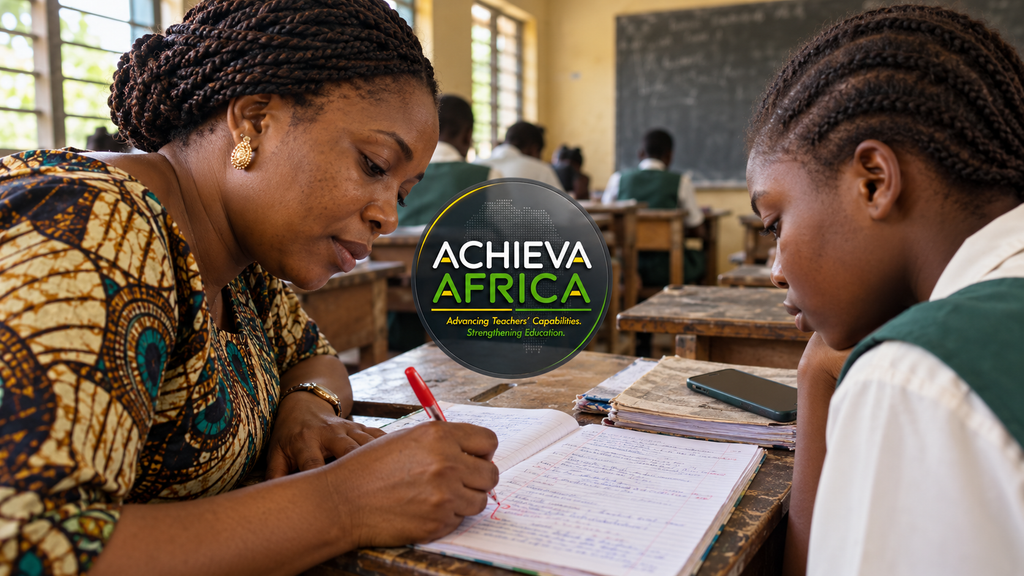
For example, a six-week trial in Edo State gives policymakers a concrete case: public senior secondary students joined a twice-weekly after-school English program. A teacher introduced curriculum topics and guided students through questions with a generative AI tutor. Teachers checked responses and helped students avoid shortcuts. The program also included structured prompts, teacher training, lesson guides, and peer learning. [2]
Students scored 0.23 standard deviations higher on the English assessment than the comparison group. The combined result was 0.31 across English topics, AI knowledge, and digital skills. A standard deviation describes how spread-out scores are and lets researchers compare gains across assessments. The results are encouraging, especially given the program’s total duration of about 13 hours. Even so, the research measures one subject in one state. It does not establish the effect of an open chatbot. Researchers also cannot isolate AI’s contribution from teacher guidance, curriculum, training, and other program elements. [2, 3]
For policymakers, this difference is important. An education system invests in teacher guidance, curriculum, training, and support as a whole. A good result can lead to more testing, but it cannot answer a national policy question on its own.
Ghana offers a different low-bandwidth example.
In another early study in Ghana, researchers tried out Rori, an AI math tutor on WhatsApp, with about 500 students. The students used a low-cost smartphone for one hour a week during the study, along with their regular math classes. The group using Rori had higher math growth scores, with an effect size of 0.36 standard deviations. However, the authors said these results are early and only cover the first year. This example shows that even a basic phone and a low-bandwidth connection can help students get extra practice. But it does not prove the same results would happen at a larger scale or in Nigeria’s different schools and languages. [4]
The learning problem comes before the technology.
Technology can help teachers reach students who need more practice. But it cannot take the place of trained teachers, books, class time, safe schools, electricity, or teaching in a language children understand. In Nigeria, results vary a lot by wealth: only 4 percent of the poorest children had core reading skills, while 66 percent of the richest did. [1]
Because of this, an AI program should begin by asking what the real problem is. Do students need more practice? Do teachers need materials for classes with different skill levels? Or do schools lack power and trained staff? Each issue needs a different solution. A chatbot cannot make up for a missing classroom, and a device cannot teach well in a language it does not handle properly.
More generally, the same care is needed across Africa. A rural school with unreliable power, a crowded city classroom, and a refugee learning center all face different challenges. A national plan should let local leaders make decisions, but also set shared rules for safety, quality, and accountability.

Where AI could help in teaching and learning
Guided practice and teacher support
The best example is guided practice. Here, a tutor gives examples or hints and asks the student to explain a step before giving the answer. The tool should match the local curriculum and help the student think through the problem. It should not just give away the answer.
AI might help teachers get ready for lessons, make questions, or explain things more simply. But saving time has not yet been shown to improve learning in African classrooms. Teachers still need to check for mistakes, make sure the content fits the culture and age group, and see if it matches the course.
Access and system support
Speech and translation tools can help students with disabilities or those learning in a second language. But how well they work depends on the language, accent, and device. Schools should try them out with students and local teachers before relying on them. For example, a tool that works in English might not work well in Hausa, Igbo, Yoruba, Amharic, Kiswahili, or other local languages.
AI can help education offices keep records or spot attendance problems. But if AI predicts a student might drop out, a person should review the case instead of letting the system label a family or cause unfair treatment. AI should highlight issues for a trained person to check, not make final decisions about a child’s placement, discipline, or access to services.
Better AI performance does not always mean better learning.
A learning tool’s design affects what students learn. In a study with almost 1,000 high school students in Turkey, those who used standard GPT-4 did better during math practice. But on a later test without AI, their scores were 17 percent lower. When the tool included teacher-written hints, this drop mostly did not happen. The study did not include African schools, but it shows that doing more work with a tool does not always mean learning more. [6]
A 2026 World Bank review offers a broader test. Across 14 studies in 10 economies, adaptive and AI-enabled tools raised learning by 0.125 standard deviations on average. Yet the evidence excludes low-income settings. Only two studies reported comparable costs, and public use at scale remains largely unobserved. The review found no clear evidence that generative AI outperforms earlier adaptive learning technology. These limits make a strong case for local evaluation before large public purchases. [5]
The key is to measure what really matters. Test students both with and without the tool. See if they can explain a method, remember it, and use it to solve new problems. Check learning after the pilot ends, not just while students are using the tool.
Teachers need authority, training, and time.
A system will not earn trust if teachers are the last to know about AI. Teachers should help choose tools, create prompts, test materials, and report wrong answers. They need enough time and hands-on training. One demonstration is not enough to prepare a teacher to check AI results or change a lesson to use it.
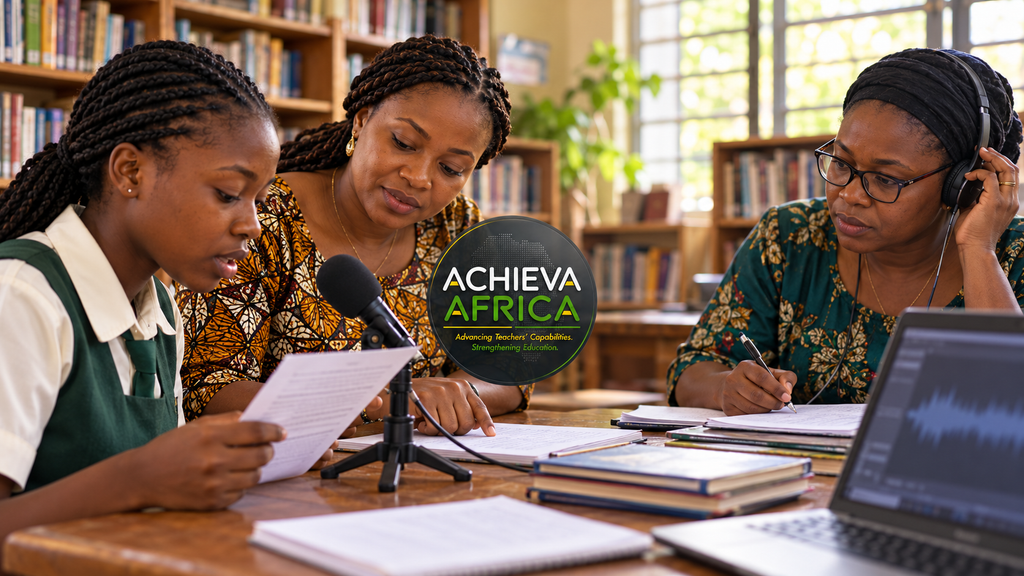
As a reference, UNESCO’s teacher framework covers human-centered use, ethics, AI foundations, pedagogy, and professional learning. Its student framework covers human-centered thinking, AI ethics, technical understanding, and system design. Each ministry must translate these ideas into local language, curriculum, age levels, and classroom practice. [7, 8]
In practice, teachers should be able to overrule AI suggestions and explain their reasons. Students should know when AI is being used and what mistakes it can make. Schools need clear rules for homework, tests, and telling others when AI is used. For example, policies can separate brainstorming with AI from turning in AI-generated work as your own, so students learn to use AI responsibly and keep their own ideas.
Child safety belongs in the design and the policy.
Beyond learning outcomes, children’s rights require more than a privacy notice. An education tool may collect names, voice recordings, student work, device identifiers, or information about a learner’s needs. Schools should know what data a tool collects, where it goes, and who can access it. They also need to know how long it stays and whether vendors use it for training. In particular, they should not enter identifiable student data into public AI tools unless they verify approved protections. [13]
Nigeria’s Data Protection Act provides a national framework for personal information. Ministries and school leaders should verify that procurement and vendor contracts meet its requirements. They should provide age-appropriate protections, simple complaint channels, and human review of decisions affecting learners. [13]
Safety is more than privacy. It also means checking if a tool is fair. A language model might not understand a dialect or might work differently for different groups of students. Schools should test for accuracy, bias, harmful content, and accessibility before using a tool, and check again after updates. Vendors should share known limits and provide a way to report problems. If a product cannot explain how it uses children’s data, schools cannot judge its risk.
Children should help shape the rules.
Children already use AI for schoolwork, information, and new skills. In 2026, UNICEF Innocenti reported consulting 97 children ages 9 to 17 across five African countries. They were the Democratic Republic of the Congo, Egypt, Mozambique, Senegal, and Rwanda. They valued AI for some tasks but worried about false information, privacy, safety, and dependence. They also emphasized critical thinking, foundational literacy, and knowing what information is safe to share. [9]
Because of this, children’s opinions should be part of product design and policy. When ministries and schools ask children about rules, tools, or pilot programs, students can point out problems that adults might not notice. These problems can include confusing instructions, unsafe prompts, features that are hard to use, or effects on the classroom. Participation should be real, and children should see that their feedback leads to changes. AI guidance calls for oversight, safety, privacy, fairness, transparency, accountability, and inclusion. It also emphasizes children’s best interests and well-being. In practice, pupils should know when AI is responding and how to report troubling content. They should be able to ask a teacher for help without penalty. [10]
Policy must connect national ambition to classroom rules.
At the continental level, the African Union Executive Council endorsed its AI Strategy in July 2024. It calls for an Africa-centered approach that is ethical, responsible, equitable, and development-focused. Nigeria published its National Artificial Intelligence Strategy in 2025, with pillars covering infrastructure, an AI ecosystem, sector adoption, responsible development, and governance. These strategies set direction. Education systems still need classroom rules for principals, teachers, vendors, and parents. [11, 12]
To put these strategies into action in classrooms, an education AI policy should list what tasks AI can do and what decisions must be made by people. It should say what proof vendors need to give before a tool is bought. The policy should set rules for data security, age-appropriate design, accessibility, language quality, curriculum fit, and how to report problems. It should also name the public office in charge and explain how families can challenge mistakes.
In Nigeria, federal guidance should align with states, which manage many public schools; other African countries will have different institutions and laws. Across settings, education ministries should work with data protection authorities, teachers, child protection bodies, local researchers, and learners. International partners can support evaluation and public infrastructure, while governments retain control of priorities, data, and procurement.
Build the conditions for fair access.
A tool that expects steady electricity, broadband, and a personal device will help some children more than others. Public programs should consider power, data costs, device repairs, tech support, and offline options. They should check access by gender, disability, income, location, and language. If not, a program could make gaps bigger instead of closing them.
Language needs more attention than just a mention in a strategy. Ministries should test AI responses with people who speak the languages children use at school and at home. They should create materials that match the curriculum with help from local teachers and experts. Teachers should check translations for meaning and grammar. Making sure content is locally relevant is part of quality.
Procurement should count the full cost: licenses, devices, connectivity, training, maintenance, data protection, and staff to monitor performance. A low subscription price can hide expensive infrastructure or vendor dependence. Public buyers should require portable learning records. Contracts should allow exit without losing essential data or materials.
Move from pilot to public value in stages.
Given this evidence, the World Bank review shows why steps matter. Short trials do not prove a tool will work across a country. First, a ministry or state should work with teachers and communities to find a clear learning need. Then, it should pick a tool that fits the curriculum and local setup. Set up safeguards and decide what success looks like before starting.
An independent review should compare learning with another good option. It should measure basic skills without AI and see if improvements last. Results should be reported separately to show who benefits and who does not. Include the full cost and teacher time. Then share the findings, even if they are negative or mixed.
Only after these steps should leaders decide to expand, change, or stop a program. Growth should come after proof of learning, safety, cost, and local fit. A tool does not show public value if scores only go up while answers are available, or if it only works in well-connected city schools.
Make learning the measure of progress.

Overall, the evidence suggests that AI could be helpful in African education systems. Its value depends on better learning, support for teachers, and protecting every learner’s right and dignity. The Edo trial shows that a guided program can lead to real gains under certain conditions. Other studies show why rules and local testing are important.
Before using AI, policymakers should share the rules for use: a clear learning goal and trained teachers. They also need safeguards for children, local language and curriculum fit, and steady access. Independent checks and ways to fix problems are important too. Development partners should help fund these basics as well as the tools. Tech companies should follow public standards and accept review.
The opportunity is real, but it depends on the right conditions. The real test is whether more children can read, think, and solve problems confidently, even without technology.
Frequently asked questions (FAQs)
Can AI improve learning in African schools?
It may help in specific, guided uses such as extra practice. Results depend on curriculum fit, teacher support, student access, and assessment without the tool.
What did the Edo State AI tutoring trial find?
In a six-week after-school program for public senior secondary students, English assessment gains were 0.23 standard deviations. The combined result was 0.31 and included English, AI knowledge, and digital skills. The study tested a supported program package, not an open chatbot alone.
What safeguards should schools require before adopting AI?
Schools should require data protection, age-appropriate design, human oversight, bias and language testing, clear vendor limits, accessible complaint routes, and a way to review consequential decisions.
Can AI work where internet access is limited?
Some chat-based tools can run on basic mobile devices and low-bandwidth networks, as the Ghana Rori study illustrates. Schools still need reliable access to a device, a data and power plan, and evidence that the tool fits local teaching.
Does Africa have one AI education policy?
No. The African Union has a continental AI strategy. Each country has its own education system, laws, infrastructure, and policy choices.
How should children take part in AI policy?
Schools and ministries can consult students when setting rules and evaluating tools. Children should be able to report harms and hear how their feedback changed decisions.
Sources
[2] World Bank, Addressing the learning crisis with generative AI lessons from Edo State in Nigeria
[3] World Bank, From Chalkboards to Chatbots Policy Research Working Paper 11125
[5] World Bank, Can EdTech Close Learning Gaps: Global Evidence from Digital Interventions, 2026
[7] UNESCO, AI Competency Framework for Teachers
[8] UNESCO, AI Competency Framework for Students
[9] UNICEF Innocenti, Skills for an AI World Insights from Children in Five African Countries, 2026
[10] UNICEF Innocenti, Guidance on AI and Children, Version 3, 2025
[11] African Union, Continental Artificial Intelligence Strategy
[13] Nigeria Data Protection Commission, Nigeria Data Protection Act 2023
Join the Conversation
Comments are reviewed before appearing publicly.
Working Together
Join The Conversation
Share a thoughtful perspective. Comments are reviewed before appearing publicly.