Education Systems and Policy
Achieva Africa’s Continental Climate Education Initiative Can Prepare African Learners for Climate Action and the Green Economy
Climate education in Africa can prepare learners for climate action when curriculum, teacher capability and practical projects connect local knowledge to scientific evidence. Achieva Africa’s proposed continental initiative aims to share relevant resources and build green skills without imposing one curriculum across diverse national systems.
 Bright Chimezie Irem14 Min Read
Table of Contents
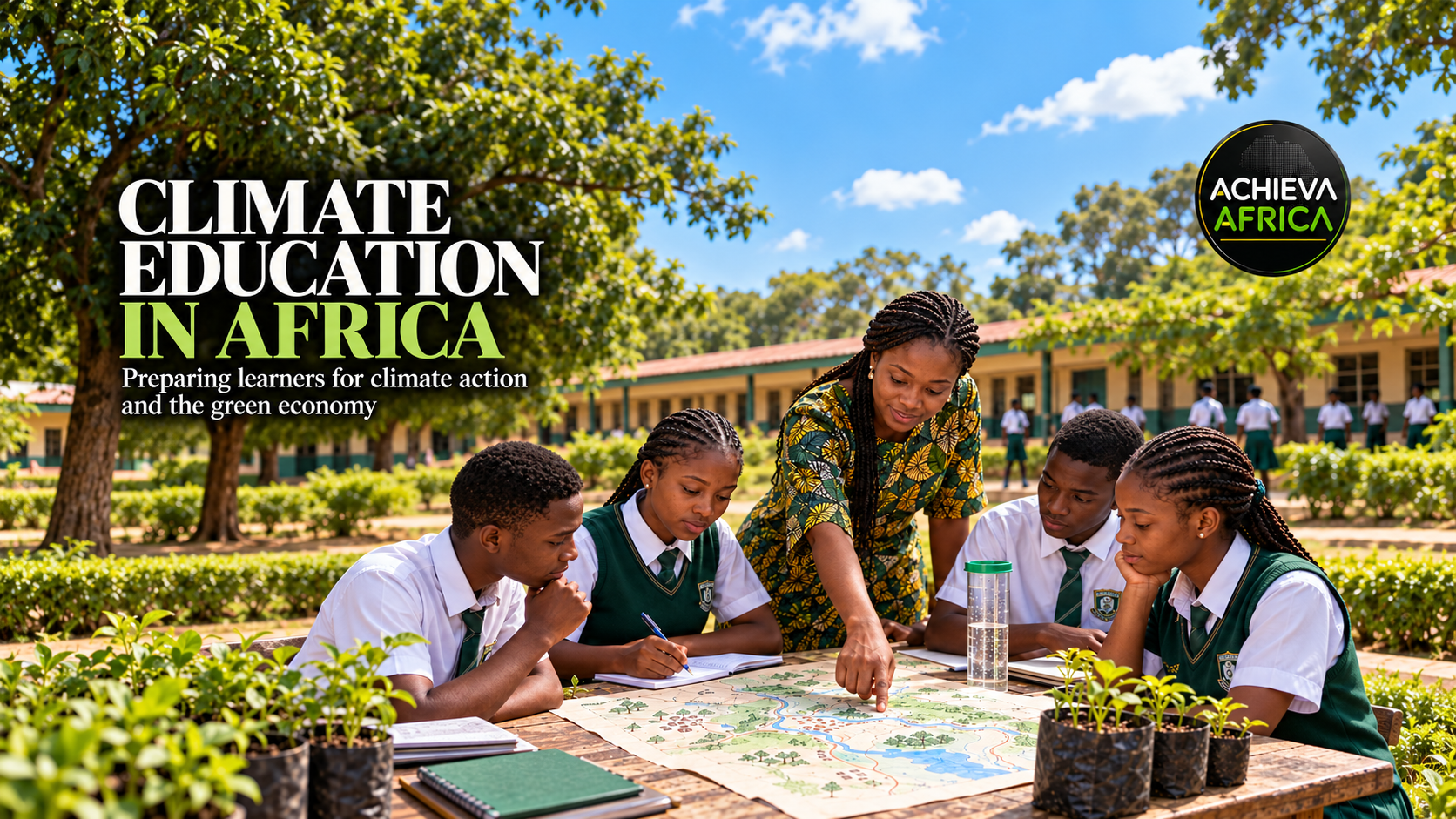
A country-led effort across the continent can link Africa-focused climate research, teacher expertise, and hands-on learning, without forcing everyone to use the same curriculum.
By Bright Chimezie Irem | Achieva Africa
For fifteen-year-old Joseph Yohane, the climate crisis was personal. Floods often disrupted his school in Nsanje, southern Malawi, and Cyclone Freddy in 2023 destroyed crops on his family’s farm. Through a climate education and innovation program at the African Drone and Data Academy, part of Malawi University of Science and Technology, Yohane and two teammates created a prototype for using drones to plant trees in hard-to-reach places. Their project also included climate mapping, smart agriculture, and ways to help communities communicate. UNICEF highlighted the program in August 2025. This project is still a prototype and does not prove that drone planting works or is ready for widespread use.
This example is important for a specific reason. It shows what climate education can help students achieve: a young person can spot a local risk, use evidence and technical ideas, and suggest a possible solution. While a youth innovation program is not the same as a national curriculum, it highlights the skills that education policy can develop through regular teaching, hands-on work, and access to experts.
The stakes for the region are high. According to a 2026 UNICEF and Dalberg assessment, climate-related disruptions affected 130 million children in Eastern and Southern Africa from 2005 to 2024, causing US$1.3 billion in direct damage to education systems. Climate education in Africa must help students take action, while schools work to keep learning going during disruptions.
Climate education has two public responsibilities.
Education systems have two main jobs. First, they must protect learning from climate risks by making schools safer, planning for emergencies, and keeping classes running during disruptions. Second, they should help students understand climate science and use it to make choices about health, food, water, energy, land, and work. One job keeps education running: the other builds skills and knowledge. Both matters, but neither can replace investing in infrastructure, early warning systems, public health, or cutting emissions.
Meeting these responsibilities requires teamwork across different ministries and professions. School safety officials need up-to-date climate risk information. Curriculum teams should work with teachers and climate scientists. Communities need clear advice that fits their local situation. Students need to build their understanding step by step, not just attend one-off awareness events that leave them confused about the evidence or how to use it.
The African Union’s Climate Change and Resilient Development Strategy and Action Plan for 2022 to 2032 calls for teaching climate literacy at all levels of formal education, from primary to tertiary. This regional guidance supports national planning, but each country still needs to set its own curriculum priorities, learning order, and teaching methods.
Move from climate knowledge to capability.
We should judge climate learning by what students can explain, analyze, and do. For example, a student should know the difference between weather and climate, describe how human actions cause long-term warming, and understand that the impact of a hazard depends on exposure and vulnerability, not just the event. Students should also be able to evaluate evidence, compare possible responses, and clearly say what is known, what is uncertain, and what more needs to be learned.
These skills develop gradually. Younger students might track rainfall, notice shade, or talk about how heat changes their school day. Older students can look at local records, weigh different ways to adapt, or explain how choices about energy and land use affect emissions and resilience. When assessing students, teachers can look at their reasoning, use of evidence, teamwork, and ability to suggest practical solutions, as well as their understanding of climate concepts.
This goal goes beyond just adding a climate chapter to a textbook. It also makes climate education relevant in many subjects. Geography can look at risk and location. Science can teach about climate processes and how to measure them. Math can help students work with data. Business and technical classes can explore resource use, design, and changing production. The aim isn’t to turn every subject into environmental studies, but to show how each subject helps people make decisions about climate.
Base and focus curriculum in African places and evidence
Decolonizing a curriculum means asking practical questions about who decides what examples are used, which researchers and experts are included, what languages students can use, and whether African communities are shown only as victims of climate change or also as creators of science, policy, and solutions. Making the curriculum local means adapting lessons to a country’s climate risks, education system, jobs, and languages, while keeping the science accurate.
Local knowledge is important. Farmers, fishers, herders, and other community members often notice details about seasons, water sources, soil, and how their work is changing. These observations can help shape questions in the classroom. They should be considered along with climate records, scientific studies, and other evidence. Local experience by itself may not explain why the climate is changing, but scientific findings should not ignore what communities see.
A good lesson can bring both types of evidence together. Students might compare what the community says about when rain falls with official records, talk about the limits of each source, and ask what decisions can be made using both. Teachers can help students tell the difference between a single storm and a long-term trend and remind them not to blame a specific event on climate change without enough evidence.
Africa has many different climate zones and education systems. Heat, drought, floods, coastal erosion, and changing seasons affect each place differently. Countries also have their own curricula, school languages, and ways of running schools. So, any continent-wide effort should help local adaptation and respect national control, not try to replace them with a single syllabus.
Prepare teachers to translate climate knowledge.
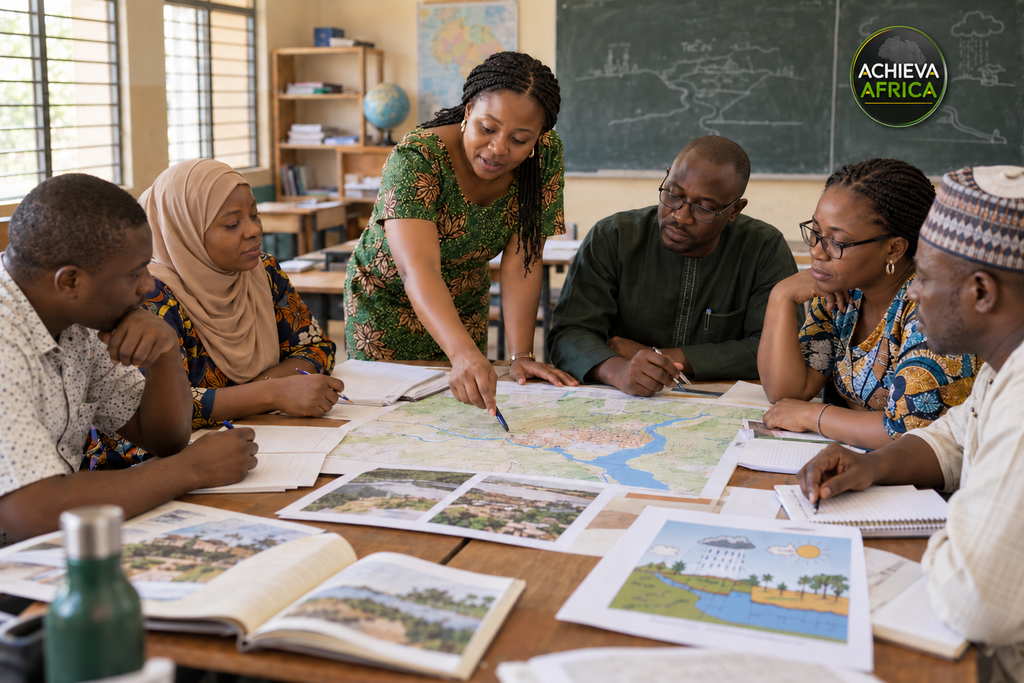
Teachers are the bridge between the curriculum and students’ understanding. Climate topics appear in science, geography, agriculture, social studies, engineering, and business. Teachers need good materials, clear goals, time to prepare, and training that helps them teach concepts well and lead hands-on activities. A single workshop or new handbook can help, but ongoing support and professional development are still needed.
Nigeria offers a useful policy example. Section 26 of the Climate Change Act 2021 provides that, with Council approval, the National Council on Climate Change Secretariat advises agencies responsible for educational curricula on integrating climate change across disciplines and levels. It also allows the Secretariat to partner with those agencies or support scientific research and related projects for curriculum and program development. The Federal Ministry of Education’s 2025 school handbook says climate change and disaster risk reduction are already embedded in the Nigerian curriculum and provides guidance and classroom activities to support teachers.
In Malawi, UNESCO reported in 2025 that the government started adding climate change to the curriculum and teacher training, with help from the Climate Smart Education Systems Initiative. This work included reviewing curriculum and training materials and setting learning goals. These are steps in putting plans into action, not proof of long-term impact on students. Their value is in showing what it takes to connect policy, curriculum design, and teacher support. For an African climate education initiative, support for teachers should include examples from their own contexts, subject-specific advice, reusable activities, and assessment tools. Teachers should also be able to ask questions to climate researchers and local experts. They shouldn’t have to make up for missing data, materials, or resources on their own. Personal effort alone.
Make practical learning part of the course.
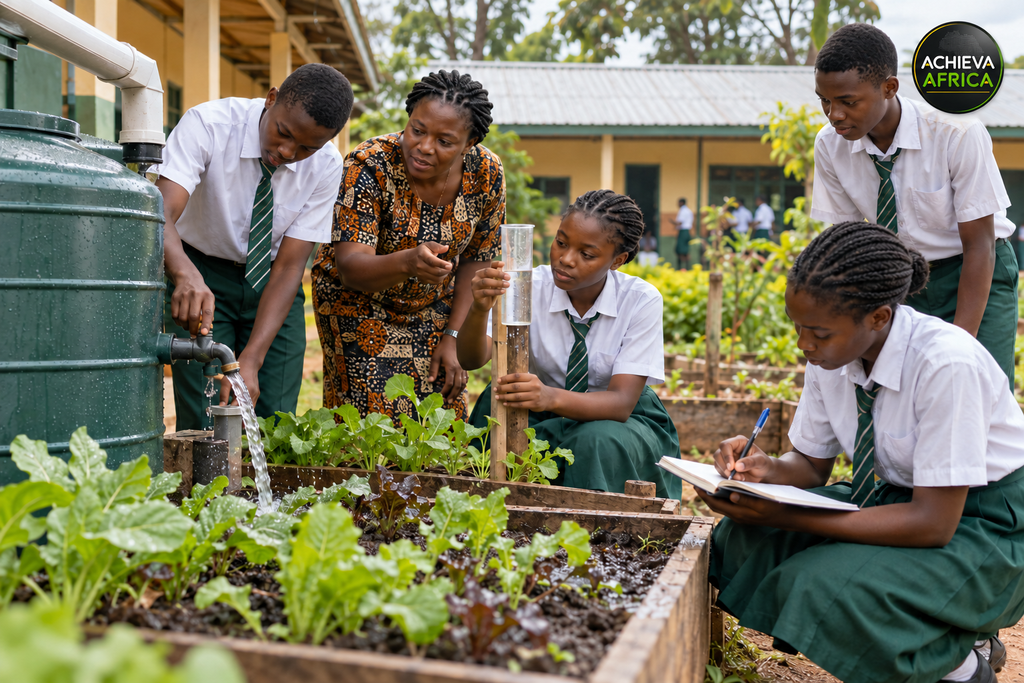
Hands-on learning is most effective when it has a clear goal. Students can map where water gathers near their school, compare heat and shade in different areas, look at how waste is managed, or study how changing weather affects local food. These projects don’t need costly equipment, but they do need a good question, a safe approach, the right permissions, and an adult to help students make sense of what they discover.
A capstone project lets students combine skills from different subjects. A team might gather observations, talk to community members, check scientific sources, think about possible solutions, and present a well-reasoned recommendation. A green project practicum can build on this by letting students work with a local organization, technical college, farm, business, or public agency under supervision. These activities should keep students safe, respect what the community knows, and make it clear what students can and can’t do in their proposals.
Teachers should look at the quality of students’ work, not just their good intentions. They can use criteria like how accurate the climate explanation is, the strength of the evidence, how clear the analysis is, whether the proposal is practical, teamwork, and how students respond to feedback. Even if a project finds a problem but decides more data is needed before acting, it can still show strong learning.
The goal isn’t to make children responsible for public climate action. Students shouldn’t be expected to solve problems that need government funding or expert engineering. Instead, they should have structured chances to understand these issues, test their thinking, and see how evidence shapes decisions. This way, practical learning can help students feel empowered without pretending a classroom project can solve everything.
Connect green skills to changing livelihoods.
The green economy covers many sectors, and learning about climate doesn’t guarantee a job. The World Bank’s 2024 report Choosing Our Future says green skills include technical, STEM, sector-specific, cross-sector, and social skills. The report also notes that demand for these skills varies by location and is hard to predict. These skills can be important in both current and new types of jobs.
Education systems can help students see how climate knowledge links to fields like agriculture, construction, transport, energy, water, waste management, public health, and business. Schools and technical colleges can connect students to further study, supervised practice, and reliable local job information. Employers and public services can help spot changing skill needs, as long as their advice supports broad education instead of just filling current job openings.
The main benefit is preparation, not a job guarantee. A strong base in science, reading, math, teamwork, and problem-solving helps young people adapt as technology and job markets change. Climate education adds a way to use these skills for decisions that matter to families, communities, and employers.
Build continental cooperation without one syllabus.
Working together across the continent can make it easier to find and adapt knowledge. Researchers, education ministries, curriculum teams, teacher trainers, and practitioners can share reviewed resources, case studies, technical advice, and ways to assess learning. A resource from one country might help others if its evidence, language, climate context, and limits are clear. Sharing should help with adaptation, not force everyone to use the same thing.
A regional framework could set out common climate ideas and broad student skills, while letting each country decide how and where to include them in their curriculum. It could also offer a catalog of Africa-focused climate research, teaching materials in local languages, guidance on adapting content, and a network for teachers and curriculum experts to share experiences. Each resource should show its source, be reviewed, and include an update date to reflect new evidence and policy. Ministries and national curriculum authorities retain responsibility for public education policy. Universities and research institutions contribute evidence. Teachers judge whether materials are teachable. Communities help make local context visible. Development partners may support financing and technical expertise. The relationships should specify who approves content, who maintains resources, what data can be shared, and how participating countries retain control over curriculum decisions.
Defining Achieva Africa’s role as a connector.
At Achieva Africa, we are building our climate education initiative to connect people. We aim to bring together curriculum and assessment experts with climate researchers, teachers, and policy professionals for ongoing conversations.
Our plan is to develop, gather, and share Africa-focused learning resources, bring together people from education, business, and policy, and create chances for hands-on learning and professional growth.
Our goal for the continent is to create a framework for working together, not to suggest that one curriculum fits every country. We want to help education systems find useful research and resources, adapt them to their own standards, and link classroom learning to local climate issues and changing skill needs. This work relies on formal partnerships with national institutions and others who can offer expertise, funding, and support.
The main way to judge this initiative is by whether it helps educators use solid African evidence and whether students can show what they’ve learned. It’s important to reach many people but reach without quality isn’t enough. A big library of materials is not helpful if teachers can’t access, translate, or use them. A continental platform should be measured by what works in classrooms and communities.
We want this initiative to help knowledge move across borders while respecting each country’s choices. No one group can do this alone. It will take clear partnership agreements, open reviews of resources, easy-to-use formats, and public updates on what’s developed and who can use it.
Policy choices for a usable continental framework
Education and climate policy leaders can make five practical choices. First, decide what students should be able to explain and show at each stage of education. Second, review current curriculum content, climate plans, local research, and teacher needs before adding new material. Third, invest in teacher training, subject resources, and time for hands-on work. Fourth, link student projects to safe, supervised partnerships with local groups and workplaces. Fifth, agree on how learning, access, costs, and use of materials will be reviewed in each setting.
Education authorities should be the ones making these decisions, not just working around them. A continental initiative can bring people together and support the process, but country-led design makes content relevant and usable. Each country should pick its own evidence, curriculum order, languages, and partnerships. Regional learning can help guide these choices without making everything the same.
Funding should pay for everything needed to turn resources into real learning: reviewing content, translating, training teachers, designing assessments, providing student materials, ensuring connectivity where needed, and helping schools run safe projects. If the budget only covers publishing or launch events, the most important steps are left out.
The standard is what learners can use.
Climate education in Africa is truly useful when students can understand the science, interpret evidence about their own communities, work with others to test solutions, and use their skills in further study or work. This is a higher—and more practical—standard than just hearing about the topic.
Achieva Africa’s continental initiative can help by connecting the knowledge, people, and resources needed to reach this standard. Its impact should grow through country-led work, strong partnerships, and real learning outcomes. The key question is simple: can a student use what they learned in school to make a good decision about a changing climate?
Frequently asked questions
Why is climate education important in Africa?
It helps learners understand climate science, assess local risks, and apply evidence to decisions about health, food, water, land, energy, and work. Education also needs to remain accessible when hazards disrupt schools. Climate education supports adaptation and informed action, but it cannot replace infrastructure, public services, or emissions reduction.
What does decolonizing climate education mean?
It means examining who shapes curriculum, whose research and experience are included, what languages learners can use, and whether African science and solutions are visible. Local and Indigenous knowledge can enrich inquiry, while climate science and evidence standards remain essential.
How can teachers make climate learning practical?
Teachers can guide students to investigate a local question using safe observation, reliable data, and community input. Capstones and supervised projects can help learners explain the problem, evaluate evidence, compare responses, and present a reasoned recommendation.
What does Nigeria’s Climate Change Act say about education?
Section 26 provides for the National Council on Climate Change Secretariat, with Council approval, to advise agencies responsible for education curricula on integration across disciplines and levels. It also supports relevant research and curriculum projects.
Does Africa need one climate education curriculum?
No. Countries differ in climate exposure, languages, curricula, and education governance. A continental framework can share reviewed resources and broad learning goals while national authorities adapt content and teaching to local priorities.
Can climate education prepare learners for green jobs?
It can build skills useful across changing sectors, including scientific reasoning, data use, technical knowledge, and problem-solving. It cannot guarantee a job; opportunities depend on local training pathways, employer demand and economic investment.
Editor’s source note
UNICEF Malawi, Malawi’s young innovators lead the way in tackling climate change, 12 August 2025
Joseph Yohane case, the university-led climate education and innovation program, and the team’s drone planting prototype. The prototype is described as a proposed design, not a proven intervention.
UNICEF and Dalberg, Protecting Children’s Learning Futures, April 2026
Climate-related disruptions affected 130 million children in Eastern and Southern Africa from 2005 to 2024 and caused US$1.3 billion in direct education-system damage.
Federal Republic of Nigeria, Climate Change Act 2021
Section 26 addresses curriculum integration across educational disciplines and levels and support for relevant research and curriculum projects. FAOLEX hosts the linked statute.
Nigeria’s existing curriculum treatment, teacher guidance, and classroom activities.
African Union, Climate Change and Resilient Development Strategy and Action Plan 2022 to 2032
The AU strategy calls for climate literacy curricula across primary, secondary, and tertiary formal education.
World Bank, Choosing Our Future Education for Climate Action, 2024
The discussion of education as part of climate action and the breadth, cross-sector relevance and uncertain demand for green skills.
UNESCO, Greening the curriculum in Malawi, 28 July 2025
The account of Malawi’s early curriculum and teacher-training integration work through the Climate Smart Education Systems Initiative. The article distinguishes these implementation steps from measured learner outcomes.
UNESCO, Climate change education UNESCO’s general framing of climate education as developing knowledge, skills, values, and attitudes for action.
Join the Conversation
Comments are reviewed before appearing publicly.
Working Together
Join The Conversation
Share a thoughtful perspective. Comments are reviewed before appearing publicly.