Digital Education and Responsible AI
How African Education Systems Can Use AI to Improve Learning and Build Policies That Protect Every Learner
AI in African Education Systems for Better Learning and Learners’ Safety. AI may extend guided practice, support teachers, and help schools use education data. Evidence from Nigeria and Ghana is promising but limited to specific settings. The test is whether learners gain skills they can use without the tool.
 Bright Chimezie Irem13 Min Read
Table of Contents
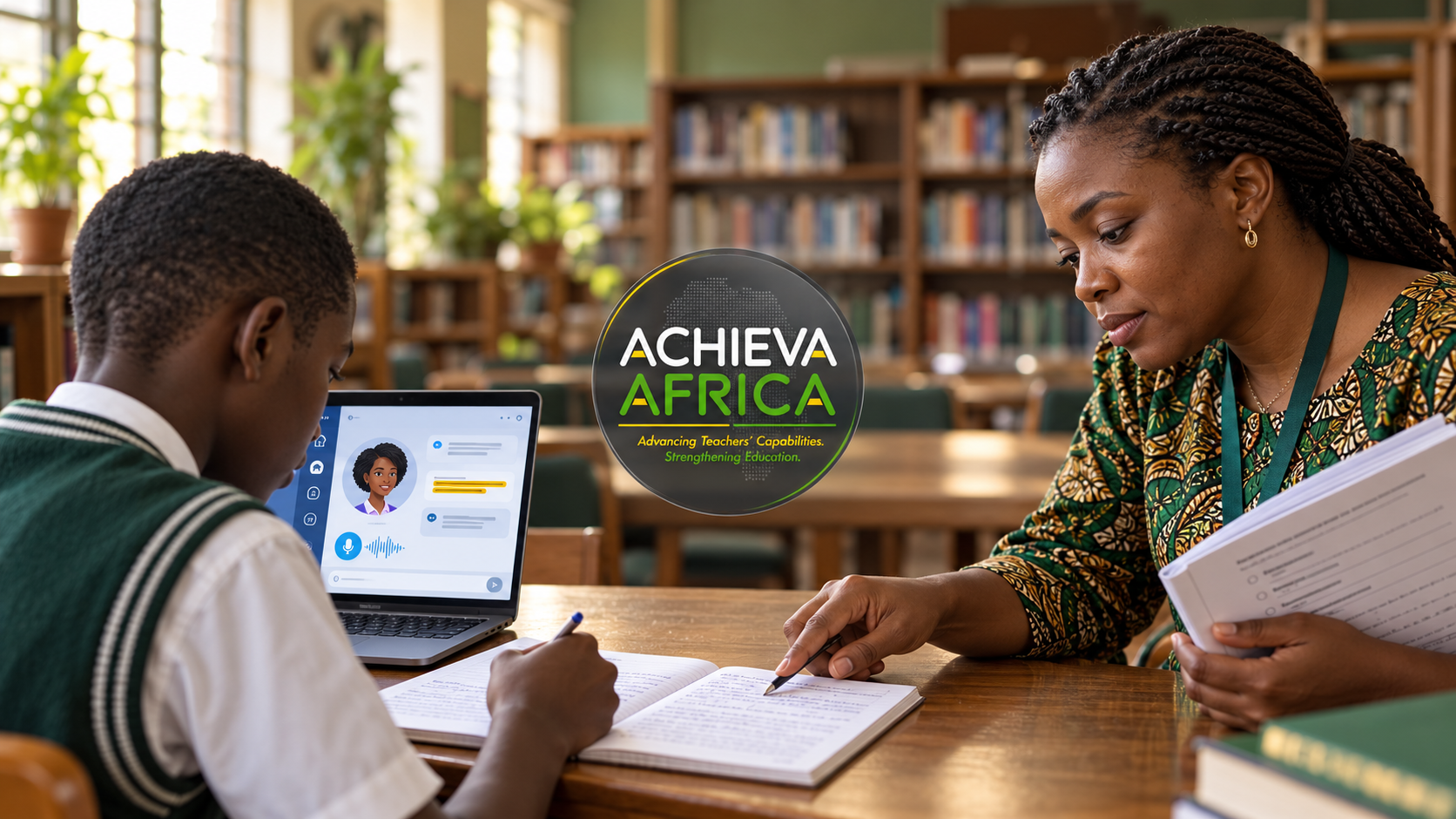
AI can support guided practice and assist teachers. Its usefulness depends on how well it fits local needs, evidence of improved learning, and safeguards that ensure accountability.
By Bright Chimezie Irem | Achieva Africa
Begin by identifying the learning problem.
In 2021, 27 percent of Nigerian children ages 7 to 14 had core reading skills at the second- or third-grade level. A quarter had the equivalent foundational numeracy skills. UNICEF reported these figures in 2024, based on a 2021 assessment. They are a baseline, not a current estimate. Still, they describe the task any education technology must meet.
In addition, the gaps follow income. In the same assessment, 66 percent of children in the richest households had core reading skills, compared with 4 percent in the poorest. A tool that requires a personal device, steady power, and paid data may widen that divide before it helps a learner.
Artificial intelligence, or AI, refers to computer systems that recognize patterns, make predictions, or generate content. In practice, judge its value by one question: does it help a learner understand and remember more, while keeping teachers and public institutions able to correct errors?
This question is important across Africa, but the answer will vary by country. Nigeria’s languages, school systems, internet access, and classroom conditions are different from those in Ghana, Rwanda, or Senegal. A good approach starts with a clear learning problem, tests a tool to address it, and only expands if the results are strong.
Evidence from Nigeria and Ghana is promising and limited.
Edo shows what guided instruction can do.
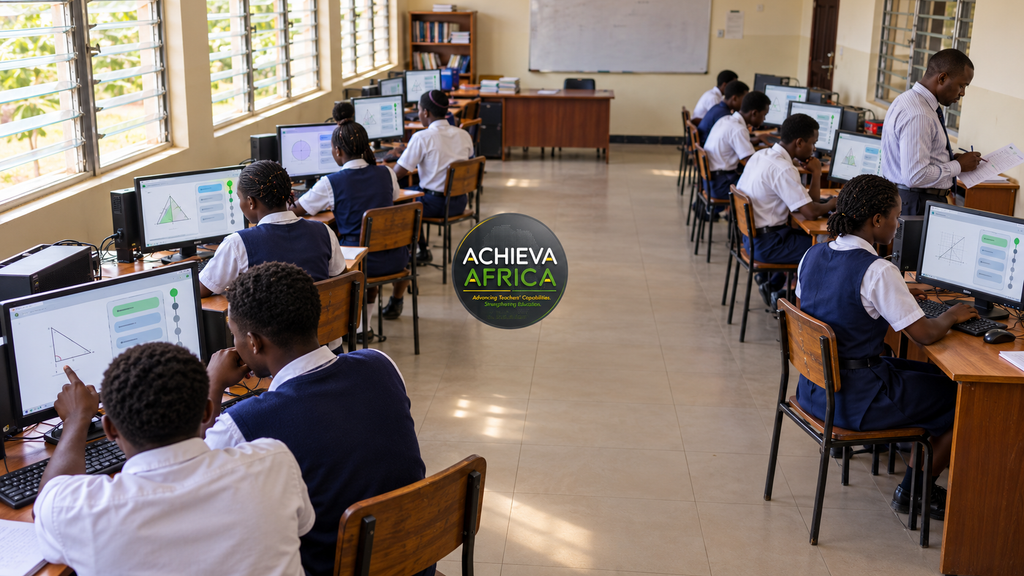
For example, Edo State provides a concrete Nigerian case. In a randomized evaluation, first-year senior secondary students used generative AI for curriculum-aligned English grammar and writing tasks during supervised after-school sessions. Students worked in pairs in school computer labs. Teachers introduced topics, guided prompts, monitored the work, and led reflection.
As a result, the trial found a 0.23-standard-deviation gain on the English assessment. A combined measure of English, AI knowledge, and digital skills showed a 0.31-standard-deviation gain. A standard deviation is a statistical measure that helps compare score differences. The trial tested a supported program that included teachers, structured prompts, and curriculum materials. It did not isolate the effect of an open chatbot.
Ghana shows what low-bandwidth delivery can offer.
By contrast, Ghana offers a different example. A preliminary study tested Rori, a WhatsApp-based AI math tutor, with about 500 students. Learners used a phone for an hour each week during study hall, alongside regular classes. The reported effect on math growth scores was 0.36 standard deviations. However, 477 students completed both the baseline and final assessments. The study took place in a particular education network and does not show the same results at the national level or across Nigeria’s different school and language settings.
The wider evidence has important limits.
A 2026 World Bank review looked at a broader range of evidence. In 14 randomized trials across 10 countries, adaptive and AI-based programs improved learning by an average of 0.125 standard deviations. However, none of these studies were from low-income countries, and only two included cost comparisons. The review also found that generative tools did not perform better than earlier adaptive technologies. These findings suggest that careful testing is needed before making large purchases.
Where AI can help without taking the teacher’s place
Guided practice and teacher preparation
A good place to start is with guided practice. A tutor can give hints, provide another example, or ask a student to explain a step. This helps students practice at their own level in the same class and gives teachers more insight into where students need help.
Still, how the tool is designed is important. It should match the local curriculum and encourage students to think before giving the answer. The tool should not just provide answers that make work look finished while students do not actually learn.
AI can also help teachers make questions, create different versions of reading passages, or plan practice for classes with students at different skill levels. It can help organize lesson materials or make explanations simpler. While these uses can save time, saving time does not always mean students learn more. Teachers still need to check facts, make sure materials are age-appropriate, fit the curriculum, and match the language and culture.
Language and accessibility require testing.
Speech recognition, translation, text-to-speech, and similar tools can help students with disabilities or those learning in a second language. But how well these tools work depends on the accent, language, and device. A tool that works in English might not understand Hausa, Igbo, Yoruba, Kiswahili, or local languages. Schools should test tools with the students and teachers who will use them. Translations should be checked for meaning and context, not just grammar.
Education management still needs human review.
Education offices might use AI to organize records, spot attendance problems, or highlight schools that need attention. These systems can help staff ask better questions, but they should not decide where a child is placed, discipline, or access to services. For example, if a system predicts a student might drop out and staff treat it as certain, it could unfairly label a family. A trained person should always review the information and let families correct mistakes.
A completed task is not proof of learning.
However, a tool can help a student finish today’s task and still weaken the student’s ability to do the work tomorrow. That risk appeared in a 2025 study of nearly 1,000 high school students in Türkiye. Students using a standard GPT-4 tutor performed better during math practice, then scored below peers on a later test without AI. A version that gave teacher-designed hints avoided that decline, though it did not outperform the control group.
However, this study does not show what will happen in African schools. It highlights the need to check learning after students stop using the tool. Schools should see if students can explain a method, remember it, and use it on a new problem without help. These skills should be measured after the pilot ends, not just while students are using the tool.
This difference should guide what schools buy. A product that helps students finish more exercises might still not pass the main test. Teachers and evaluators should check if students can think for themselves and if improvements last after they stop using the tool. Teachers need authority and practical support.
School systems will not build trust if teachers only learn about AI after decisions are made. Teachers should help choose tools, plan lessons, test results, and report problems. They need hands-on training, time to update lessons, and the power to say no to recommendations that do not fit their students or classrooms.
For guidance, UNESCO’s teacher framework identifies human-centered practice, ethics, AI foundations, pedagogy, and professional learning as core competency areas. Its student framework also includes human-centered thinking, ethics, technical understanding, and system design. These are useful reference points. Ministries still need to translate them into local curriculum, teacher preparation, age levels, and classroom guidance.
Teachers should explain when AI is being used and what it can get wrong. Schools also need rules for homework, assessment, and disclosure. Those rules can allow brainstorming or practice while asking students to identify which submitted work was generated by a tool.
Training should cover the real tasks teachers face, like checking AI-generated explanations against the syllabus, spotting wrong answers, changing prompts, and knowing when to step in themselves. A single demonstration is not enough to build this skill. Teacher colleges and school leaders should make responsible AI part of ongoing professional development.
Child safety belongs in procurement and design.
Education tools can collect names, voice recordings, student work, device IDs, and information about a student’s needs. Schools should know what data is collected, where it is stored, who can see it, how long it is kept, and if the vendor uses it to train other systems.
Nigeria’s Data Protection Act provides the national framework for personal data. Ministries and school leaders should include its requirements in procurement and verify them with appropriate legal and data-protection advice. They should also set age-appropriate protections, clear complaint routes, and human review for decisions that affect learners.
Safety is not just about privacy. Schools should also test how a tool deals with different languages, harmful content, and various student groups. Vendors should share any known limits and offer a way to report problems. If a supplier cannot explain how it manages children’s data, schools cannot judge the risk.
Policies should set limits on what a tool can decide. AI can suggest when a student needs more practice, but a qualified teacher should confirm this, look at other reasons, and decide what support is needed. Automated results should never replace careful decisions about discipline or inclusion.
Children should help shape the rules.
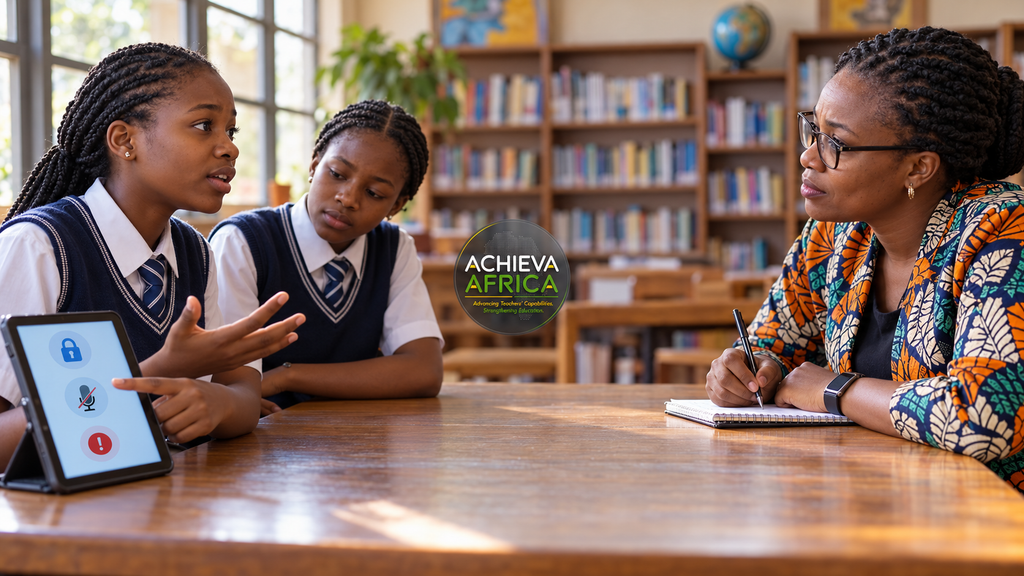
Children already use AI for schoolwork, information, and new skills. In 2026, UNICEF Innocenti reported consultations with 97 children ages 9 to 17 in the Democratic Republic of the Congo, Egypt, Mozambique, Senegal, and Rwanda. Participants saw uses for AI but raised concerns about misinformation, privacy, safety, and dependence. They also emphasized critical thinking, foundational literacy, and knowing what information is safe to share.
When students help review tools and policies, they can spot confusing explanations, unsafe prompts, features that are hard to use, and classroom issues that adults might not notice. Most importantly, their input should matter. Children should be told what changed because of their feedback.
UNICEF’s 2025 guidance calls on governments and businesses to protect children’s safety, privacy, fairness, inclusion, and best interests in AI systems. In schools, that means age-appropriate information, a trusted adult to approach, and a simple way to report troubling content or a mistaken decision.
Consultations should include children with different needs and backgrounds, such as students with disabilities, those in rural areas, and those who speak languages not well supported by commercial tools. Their experiences can show gaps that adults or vendors might miss when making policy.
Policy must connect strategy to classroom action.
The African Union Executive Council endorsed its Continental AI Strategy in July 2024. Nigeria published a National AI Strategy in September 2025, with priorities that include infrastructure, sector adoption, responsible AI, and governance. These strategies establish direction. Education ministries still need classroom rules that principals, teachers, vendors, parents, and students can follow.
An education policy should clearly state what uses are allowed, which decisions must be made by people, how data is protected, what accessibility is required, how it fits the curriculum, and how to report problems. It should name the public office in charge and explain how parents and students can challenge harmful or wrong decisions.
In Nigeria, federal guidance should be coordinated with states, which manage many public schools. Other African countries will have different laws and institutions. Across systems, education ministries should work with data protection authorities, teachers, child-protection bodies, researchers, and learners.
Development partners can help by funding evaluations, teacher training, and shared public infrastructure. Governments should keep control over priorities, buying decisions, and public data. Contracts should clearly state who owns the data, who can access it, how it is kept safe, how systems work together, and how to switch vendors without losing important records or materials.
Fair access depends on conditions schools can sustain
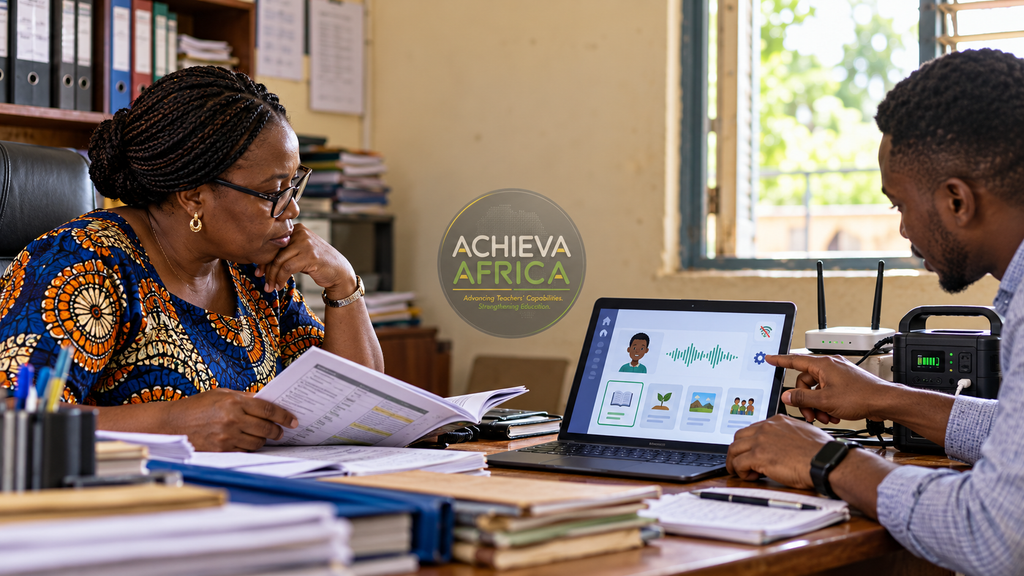
A tool that assumes reliable electricity, broadband, and an individual device will reach some children more easily than others. Public programs should budget for connectivity, power, repairs, technical support, training, and offline use. They should test access by income, gender, disability, geography, and language.
A low subscription price might hide the real costs of devices, internet, maintenance, teacher time, and data protection. Ministries should figure out the total cost before buying and compare it to other solutions for the same learning problem. A chatbot is not a good buy if a school does not have electricity or a teacher to guide its use.
Language needs a separate plan. Ministries should test AI responses with people who speak the languages children use at school and at home. Local teachers and subject experts should help create or review curriculum materials. Educators should check translations for meaning, age level, and context.
African countries are not all the same. A rural school with unreliable power, a busy city school, and a refugee learning center may each need different tools and support. Shared rules for safety and accountability can work alongside local choices about language, delivery, and curriculum.
A practical route from pilot to public value
A ministry or state should start by identifying a learning need that can be measured. Teachers and communities can help define what it is. Is the issue not enough reading practice, lack of feedback, classes with mixed skill levels, or poor attendance data? Each problem needs a different solution.
Next, leaders should pick a tool that matches the curriculum, language, power supply, and devices already in use. Before starting, they should set up child protections, name the public office in charge, and decide what success looks like. An independent evaluator should compare the results to a reliable alternative.
The evaluation should check learning without AI and see if improvements last. It should show who benefits, who does not, and include the total cost and teacher time. The ministry should then publish all results, even if they are mixed or negative.
Leaders should only expand, change, or stop the program after this process. Growth should depend on proof of learning, safety, cost, and local fit. A pilot does not show real value if scores only go up while answers are available or if the tool only works in well-connected city schools.
Development partners can help by funding baseline assessments, local language testing, independent evaluations, and teacher training. They should ask governments to share results and not tie future funding to only positive outcomes. Evidence is only helpful if it can lead to better decisions.
Measure progress by what learners can do.
AI could help African education systems with guided practice, teacher support, accessibility, and better use of education data. These benefits depend on teacher judgment, local needs, child-focused safeguards, and careful measurement.
Evidence from Edo and Ghana is promising in certain situations. Other studies warn that tools can make it easier to finish tasks, but real learning may still be weak. Public leaders should invest in the right conditions for good adoption and ask: can more children read, think, and solve problems when the technology is turned off?
Frequently asked questions
Can AI improve learning in African schools? It may help in specific uses such as guided practice. Results depend on curriculum fit, teacher support, learner access, and assessment without the tool.
What did the Edo evaluation find? A teacher-guided, curriculum-aligned program produced a 0.23-standard-deviation gain in English and a 0.31 gain on a combined measure of English, digital skills, and AI knowledge.
What safeguards should schools require? Schools should require child-data protection, age-appropriate design, human oversight, language and bias testing, clear vendor limits, and a route to challenge errors.
Can AI work where internet access is limited? Some chat-based tools have been tested on basic mobile devices and low-bandwidth networks. Schools still need device access, power, data plans, and evidence of local fit.
Does Africa have one AI education policy? No. The African Union has a continental strategy, while countries have different laws, education systems, infrastructure, and policy choices.
How should children take part? Schools and ministries can consult students on rules and tools, enable them to report harm, and tell them how their feedback affected decisions.
Sources
- UNICEF Nigeria, Situation Analysis of Children and Adolescents in Nigeria 2024
- World Bank, From Chalkboards to Chatbots: Evaluating the Impact of Generative AI on Learning Outcomes in Nigeria
- World Bank, Can EdTech Close Learning Gaps? Global Evidence from Digital Interventions, 2026
- Henkel and colleagues, Effective and Scalable Math Support: Experimental Evidence on an AI Math Tutor in Ghana
- Bastani and colleagues, Generative AI without Guardrails Can Harm Learning, PNAS, 2025
- UNESCO, AI Competency Framework for Teachers
- UNESCO, AI Competency Framework for Students
- UNICEF Innocenti, Skills for an AI World: Insights from Children in Five African Countries, 2026
- UNICEF Innocenti, Guidance on AI and Children, Version 3, 2025
- African Union, Continental Artificial Intelligence Strategy, 2024
- Nigeria, National Artificial Intelligence Strategy, 2025
- Nigeria Data Protection Act, 2023
Join the Conversation
Comments are reviewed before appearing publicly.
Working Together
Join The Conversation
Share a thoughtful perspective. Comments are reviewed before appearing publicly.